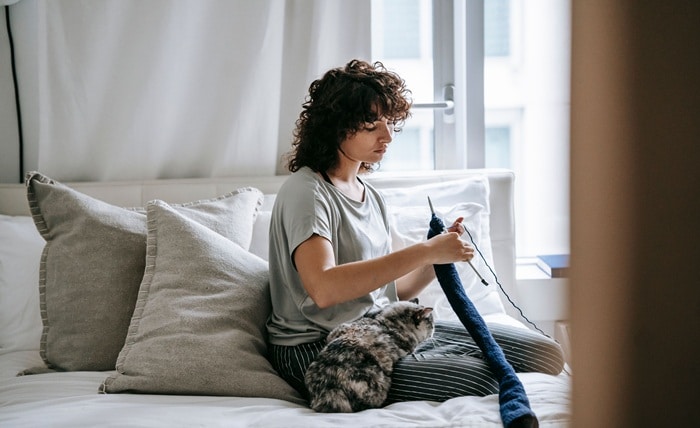
Spending time alone can provide opportunities for relaxation, learning, and personal development. For many introverts, solitude is not a sign of social isolation but a preferred environment for restoring energy and pursuing individual interests. While social activities offer interaction and shared experiences, independent hobbies allow people to control their schedules, focus on specific tasks, and explore subjects without external expectations. Choosing a suitable hobby involves understanding personal preferences rather than avoiding communication altogether.
Leisure preferences also depend on the level of stimulation people enjoy. Some individuals prefer digital entertainment and interactive experiences, including platforms where users can click here to access chance-based online games. Others find satisfaction in activities involving concentration, creativity, or gradual skill development. For introverts, hobbies that provide independence and manageable stimulation may be particularly appealing, although personality alone does not determine which activities someone will enjoy.
Why Independent Hobbies Appeal to Introverts
Introversion is commonly associated with a preference for lower levels of social stimulation rather than an inability or unwillingness to communicate.
Many introverts enjoy friendships and group activities but may require periods of solitude after extensive social interaction. Independent hobbies provide opportunities to manage this balance.
Activities performed alone also allow participants to control their pace. There is no requirement to coordinate schedules, respond to group expectations, or compare progress with others.
However, not all introverts prefer solitary hobbies. Some enjoy structured social activities where interaction develops around shared interests.
The important distinction is personal choice. A suitable hobby should provide enjoyment without creating unnecessary pressure to participate socially.
Reading and Exploring Literature
Reading is an accessible hobby for people who enjoy spending time independently.
Fiction allows readers to explore narratives, characters, and perspectives, while nonfiction introduces knowledge about history, science, psychology, and other subjects.
The activity requires limited equipment and can be adapted to different schedules. Readers may spend short periods with books or dedicate longer sessions to complex material.
Maintaining a reading journal can extend the experience by recording observations, questions, and interpretations.
For introverts who enjoy discussing ideas but prefer controlled interaction, online reading communities provide opportunities to participate without attending regular meetings.
Creative Writing and Personal Storytelling
Creative writing offers a way to develop ideas without immediate feedback from others.
Participants can explore short stories, poetry, essays, or fictional worlds. Each format involves different approaches to structure, language, and expression.
Writing also encourages reflection because authors must organize thoughts and determine how information should be communicated.
Unlike professional writing, personal creative projects do not require publication or external approval.
Some individuals maintain journals, while others develop stories over several months.
The flexibility of writing makes it suitable for people who prefer independent projects with no fixed completion schedule.
Photography as an Independent Activity
Photography combines observation with technical learning and creative decision-making.
Introverts may appreciate the ability to explore locations independently while concentrating on composition, lighting, and visual details.
Street photography, architecture, landscapes, and still-life projects offer different approaches to the activity.
Beginners can use smartphone cameras before investing in specialized equipment.
Photography also encourages attention to surroundings. Participants learn to recognize patterns, shapes, and changes in environmental conditions.
Although photographs can be shared publicly, the activity does not require an audience. Personal collections can remain private and serve as records of individual experiences.
Gardening and Caring for Plants
Gardening provides opportunities to work with living systems while following a self-directed routine.
Indoor gardening, balcony cultivation, and plant propagation are suitable for people without access to private outdoor spaces.
Participants learn how soil, water, temperature, and light influence plant development.
The activity involves observation and occasional intervention rather than continuous work.
Some introverts find plant care appealing because it combines practical responsibility with time spent away from social demands.
However, gardening requires consistency. Selecting plants according to available time and environmental conditions helps prevent maintenance from becoming stressful.
Puzzles and Logic-Based Hobbies
Logic puzzles, chess problems, crosswords, and mechanical puzzles appeal to people who enjoy structured challenges.
These activities involve analyzing information, identifying patterns, and testing possible solutions.
Unlike competitive games, independent puzzles allow participants to work without time pressure or external evaluation.
Mechanical puzzles introduce spatial reasoning, while number and word puzzles emphasize different forms of analytical thinking.
Difficulty should reflect experience and motivation. Challenges that are consistently too complex may reduce enjoyment.
For individuals who appreciate measurable progress, completing increasingly difficult puzzles can provide a sense of achievement.
Learning Skills Through Independent Study
Self-directed learning is another option for introverts interested in intellectual development.
Foreign languages, programming, astronomy, and historical research can be studied through books, recorded lessons, and practical exercises.
Participants determine which subjects to explore and how quickly to progress.
Programming offers opportunities to create functional projects, while language learning involves practicing vocabulary, grammar, and comprehension.
Astronomy introduces scientific concepts through studying celestial objects and observing the night sky.
Independent learning requires motivation, but it also provides flexibility that scheduled courses may not offer.
Nature Observation and Solitary Walking
Walking in parks, forests, or residential neighborhoods combines physical movement with opportunities for reflection.
Adding birdwatching, plant identification, or nature photography creates a specific purpose for outdoor exploration.
These activities encourage attention to environmental details without requiring organized group participation.
Routes can be adjusted according to physical ability, weather, and available time.
Safety remains important, particularly when exploring unfamiliar areas alone.
How to Choose a Hobby That Matches Your Personality
Choosing a hobby begins with identifying what makes an activity enjoyable.
Some introverts prefer creative expression, while others enjoy research, physical movement, or practical tasks.
Available time, equipment costs, and preferred environments should also influence the decision.
Trying several activities before making financial commitments can help identify sustainable interests.
Ultimately, hobbies for introverts are not defined by social withdrawal. They provide opportunities for independence, concentration, and personal satisfaction. The most suitable activities are those that allow individuals to enjoy solitude while maintaining a balance between personal interests and social connections.